Vox-style videos
How to write a Vox-style script: the beat sheet behind nine of our ads
A Vox-style script, beat by beat: the six-part structure behind nine of our ads, real timings at 150 words a minute, and templates for 15 to 120 seconds.
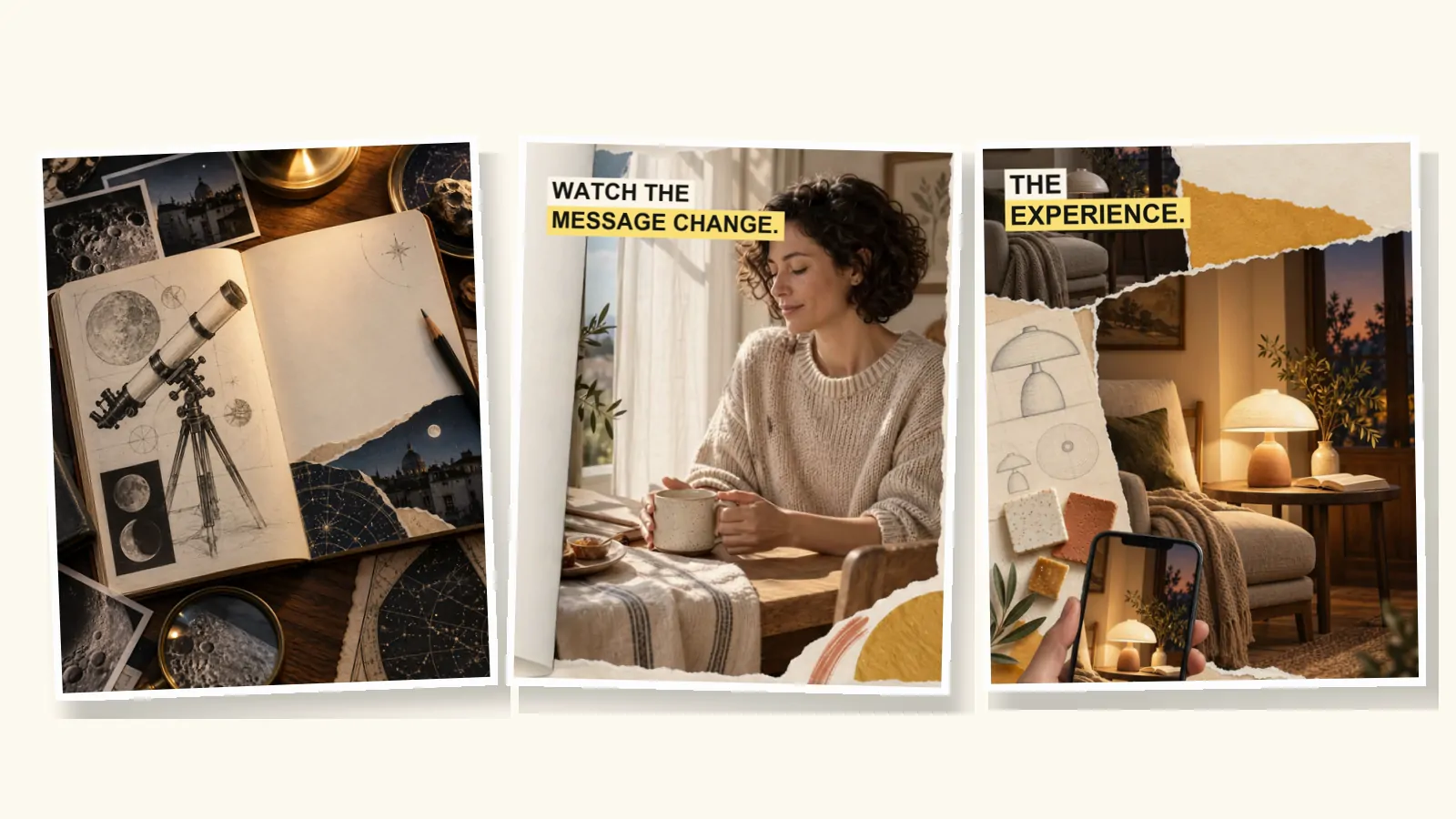
A Vox-style script gives every scene one job: one idea, one spoken line and one short on-screen label. The narration asks a question early, earns attention before it explains anything, and lets the pictures carry the detail. Write for about 150 spoken words a minute, then cut until each line can stand on its own.
That is the short answer. The rest of this guide shows the structure we used across nine Vox-style ads we produced while building vox.style, with real timings from the recordings, and templates you can copy for 15, 60 and 120-second videos.
What makes a script "Vox-style"
The look gets the attention: torn paper, photo cutouts, yellow highlighted words. The script is what keeps people watching. Vox's explainers, and the editorial ads that borrow their look, share a few habits.
- They open with a question, not a logo. The first line names the doubt the viewer already has.
- One idea per scene. A scene that tries to say two things reads as clutter, however good the collage.
- The narration and the label work together. The voice says the full sentence; the screen shows the two or three words worth remembering.
- They earn the explanation. The product, the feature or the fact arrives after the viewer has a reason to care.
A useful test: read your script with the screen turned off. If it still makes sense as audio, and every label still makes sense with the sound off, the structure is working. Feed videos usually start playing muted, so the labels have to carry the story on their own.
The six-beat structure we used in nine ads
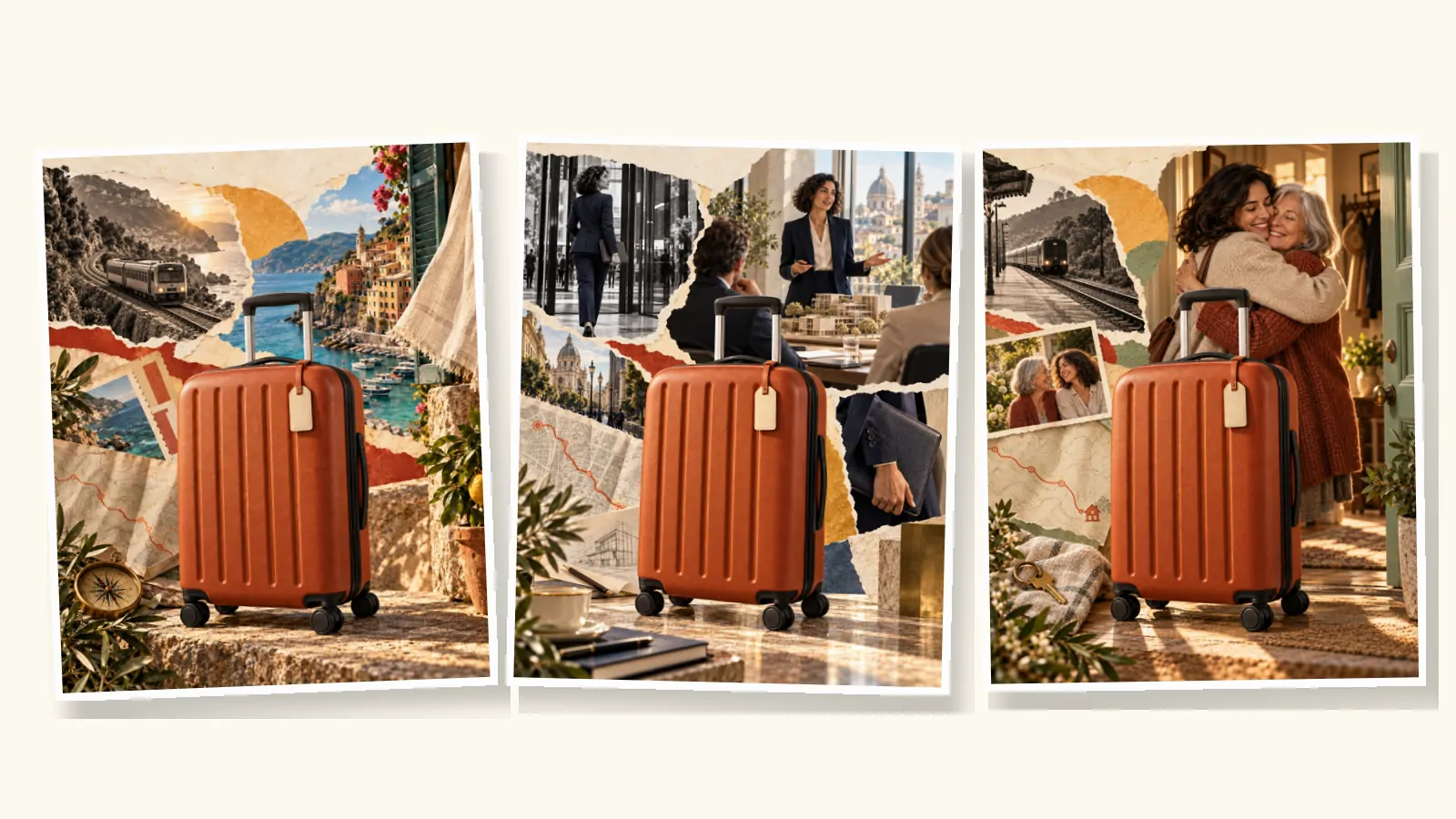
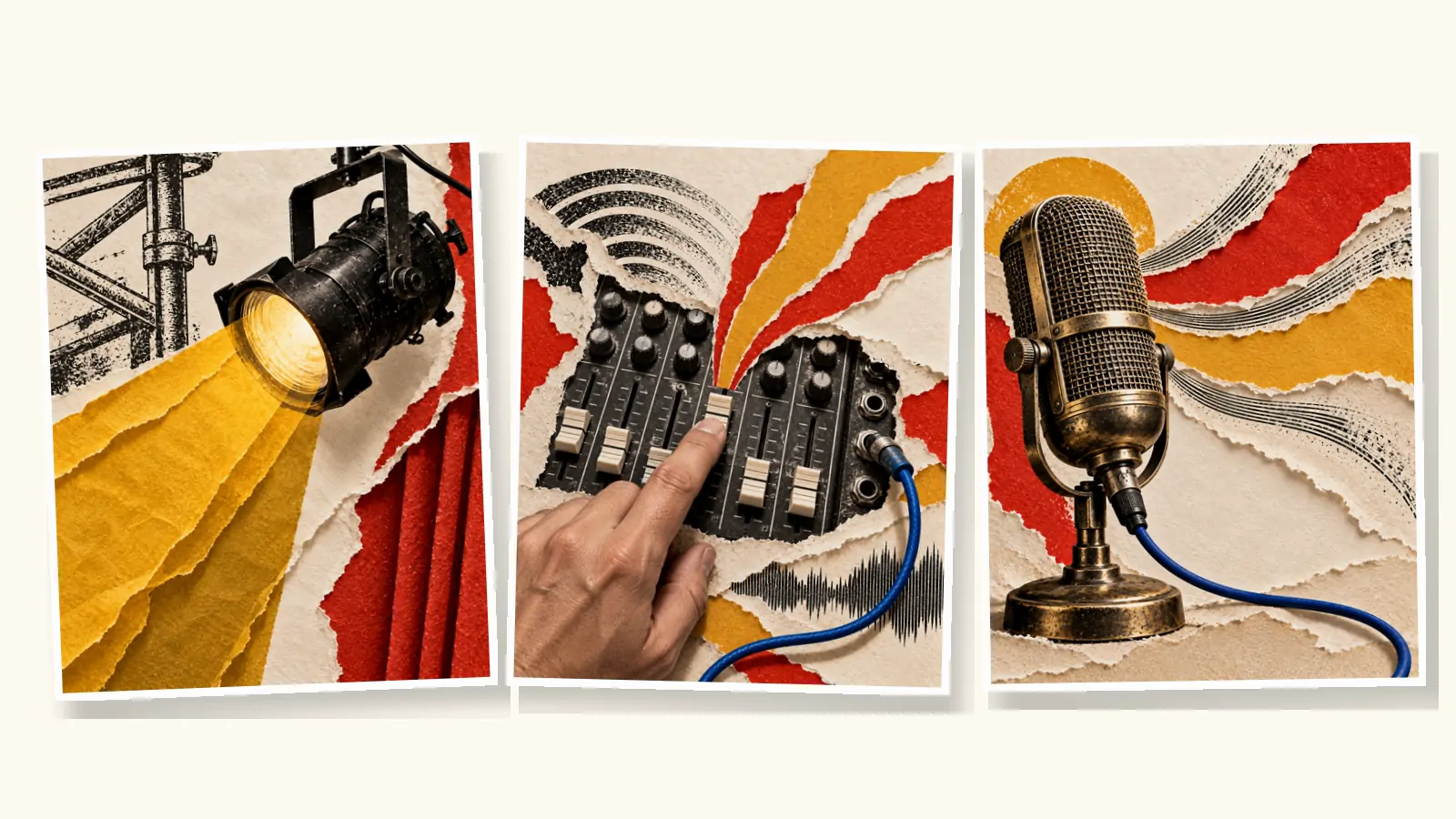
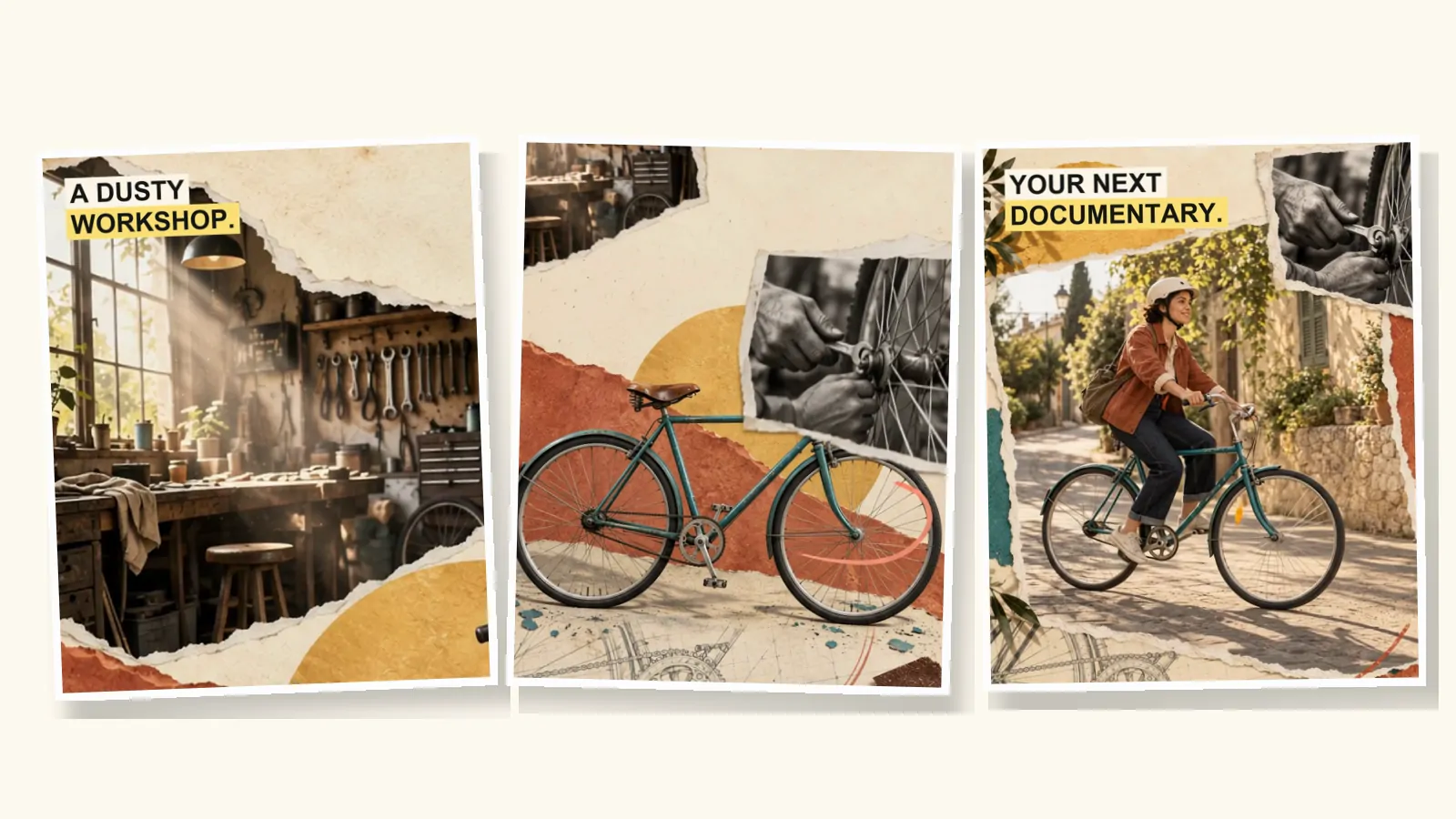
All nine ads, for a telescope, a mug, a hot sauce, a suitcase, a music venue, a jar of sauce, a lamp, a bicycle and a bag of coffee, run 50 to 74 seconds and are built on the same six beats. The products and brands are fictional; the structure is what we tested.
| Beat | Time (60 s) | Job | Example line |
|---|---|---|---|
| 1. Anti-pitch hook | 0–5 s | Name the viewer's doubt | "Another ad for a video tool? Skip the pitch. Watch this." |
| 2. Micro-proof | 5–13 s | Show the idea working, fast | "Take a bag of coffee. Start with its product page." |
| 3. Pattern interrupt | 13–29 s | Change angle, then check in | "Still watching? Same lamp. Three different stories." |
| 4. Core pitch | 29–40 s | Say what the product does | "Start with your story. Shape the script. Approve the images before they move." |
| 5. Feature stack | 40–51 s | Three short benefits | "Narration gives it a voice. Collage reveals the details. Animation carries the story forward." |
| 6. Close | 51–60 s | One action | "Your next video doesn't need a bigger claim. It needs a story worth watching." |
Two beats do most of the work.
The anti-pitch hook admits that this is an ad. "This is an ad for a video tool. So let's make it earn your attention." It sounds counterintuitive, but it disarms the reflex to scroll, because the viewer's objection has already been said out loud.
The pattern interrupt changes the subject while keeping the object. The mug ad gives the same mug "three completely different jobs": stop someone scrolling, make someone curious, make it a gift. The suitcase ad tells three different stories with one suitcase. Halfway through, a short check-in, "Still watching?", rewards the viewer for staying and resets attention before the pitch. In several of our edits the music dips under that line for a second, which makes it land.
A real script, timed
This is the full narration of our 56-second telescope ad, with the on-screen label for each moment. Timings come from the recorded narration, which runs at its original speed.
| Time | Narration | On-screen label |
|---|---|---|
| 0:00 | "Another ad for a video tool? Fair. Give me a sentence before you scroll." | ANOTHER AD? / GIVE ME A SENTENCE. |
| 0:07 | "Make a telescope feel like a ticket out of the city. That's the brief. Here's where it takes us." | A TICKET OUT OF THE CITY. / THAT'S THE BRIEF. |
| 0:14 | "Past the last lit window. Beyond the familiar skyline. To something you've never stopped long enough to look at." | THE LAST LIT WINDOW. / BEYOND THE SKYLINE. / LOOK CLOSER. |
| 0:22 | "You just left the room. And all you did was watch a video about a telescope." | YOU JUST LEFT THE ROOM. / STILL IN YOUR FEED. |
| 0:27 | "Vox Style brings words, pictures and movement together. Watch the example. Decide whether it's the kind of work you want your name on." | WORDS. PICTURES. MOVEMENT. / WORTH YOUR NAME. |
| 0:37 | "A line that opens a question. A voice that draws you closer. A sequence that makes you want the next frame." | THE WORDS. / THE VOICE. / THE MOVEMENT. / THE NEXT FRAME. |
| 0:45 | "What could your next video make someone imagine? Take a look at Vox Style." | WHAT WILL YOU MAKE THEM IMAGINE? |
A few things are worth copying.
- 126 words in 50 seconds of narration. The last six seconds hold the closing frame and the music, so the call to action is not rushed.
- 19 cuts across 12 scenes. Some scenes return later with a new label, which keeps the visual world consistent and saves production.
- Labels are two to six words. None repeats the narration word for word; each picks the phrase worth remembering.
- The brief is in the script. "Make a telescope feel like a ticket out of the city" is both the creative brief and a line the viewer hears. It shows the method instead of describing it.
How long should each scene be?
Write at about 150 words a minute and plan for scenes of three to six seconds.
We measured four of our recordings. Across the whole narration, including pauses, they ran at 147 to 158 words per minute:
| Ad | Words | Narration | Pace |
|---|---|---|---|
| Coffee | 113 | 46.3 s | 147 wpm |
| Telescope | 126 | 50.3 s | 150 wpm |
| Suitcase | 179 | 71.3 s | 151 wpm |
| Mug | 145 | 55.2 s | 158 wpm |
The faster end feels energetic in a 60-second ad; it gets tiring in a longer explainer. If a line needs more than about 15 words, it is usually two scenes. If a scene has no line at all, give it a reason: a reveal, a pause before the punchline, or a beat of music.
Templates for 15, 60 and 120 seconds
Use the word budget as a ceiling, not a target. Silence and pictures are part of the script.
15-second ad (about 30 words, 4 scenes)
- Hook (0–3 s): the doubt or the surprising detail. "One drop. What could possibly happen?"
- Proof (3–8 s): the product doing its job in one image.
- Turn (8–12 s): why it matters to this viewer.
- Action (12–15 s): one instruction, and the name.
60-second ad (110 to 150 words, 10 to 14 scenes)
Use the six beats above. Keep the core pitch to three short sentences and the feature stack to three items. Hold the last two to four seconds for the closing frame.
120-second explainer (230 to 280 words, 20 to 28 scenes)
We haven't published a two-minute Vox-style explainer yet, so treat this as the way we would scale the structure, not a tested result. Longer explainers need chapters, not a longer hook.
- Question (0–10 s): one sentence the viewer wants answered.
- Stakes (10–25 s): why the answer matters now.
- Three chapters (25–95 s): about 25 seconds each, every chapter with its own mini-hook and one fact. Give each fact a source on screen if it is a number.
- Synthesis (95–110 s): what the three chapters add up to.
- Close (110–120 s): the takeaway, said once.
Plan one "Still watching?" moment between the second and third chapters, a natural point to re-hook anyone drifting away.
Writing for the narrator
A script that reads well can still sound wrong. Write for the voice before you write for the page.
- Read it aloud, at speed. Anything that sounds like a press release gets rewritten.
- Short sentences carry the rhythm. "Past the last lit window. Beyond the familiar skyline." Fragments are fine in narration.
- Mark the pauses you want. A line break in the script becomes a breath in the recording.
- Say brand names the way they should sound. Our scripts spell the product as "Vox Style" so text-to-speech pronounces it as two words.
- Keep the recording at its natural speed. We cut narration only inside silent gaps and never sped it up to fit. If the script is too long, cut words rather than squeezing the voice.
In vox.style you can lock lines you want to keep while the rest of the script is revised. The narration is fitted to the length you choose, and the app tells you before you approve if playback will be faster.
Common mistakes
- Opening with the brand. The first three seconds belong to the viewer's question.
- Labels that repeat the narration. Pick the two words that matter.
- Too many ideas per scene. If you need "and" in a scene description, split it.
- A feature list instead of a story. Three benefits are memorable; seven are a spec sheet.
- A rushed ending. Leave room for the closing frame and the call to action.
FAQ
How long is a Vox-style script for a 60-second video?
Plan 110 to 150 spoken words. Our 60-second ads used between 113 and 145 words, with music and visual beats filling the rest. Use the lower end if the video depends on reveals or pauses, and the higher end for a fast, conversational ad.
Do I need on-screen text if the video has narration?
Yes. Feed videos usually start playing muted, so short labels carry the story until the viewer turns the sound on. Keep labels to two to six words and add a separate caption file for the full narration, so viewers who need captions get every word.
Can I use my own voice-over?
Yes. You can record your own narration or choose a generated voice in vox.style. Either way, write the script for spoken rhythm first and record at a natural pace.
What is the best structure for a Vox-style ad?
A hook that names the viewer's doubt, a quick proof, a change of angle, the core pitch, three short benefits and one call to action. The Vox-style ads guide shows how we produced one from brief to final cut.
Where does the Vox look come from?
From the explainer videos Vox has published since 2014, which made the paper-collage editorial style familiar. Read what Vox-style animation is called for the techniques, or start with the Vox-style videos guide. For subjects to write about, see our Vox-style video ideas; for longer scripts, the Vox-style documentary guide.
The ads in this article are illustrative work we produced by hand while building vox.style; the products and brands are fictional. vox.style is an independent product, not affiliated with Vox or its owners.