Vox-style videos
Vox-style video ideas: 20 stories to tell about a product, an idea or a person
Twenty Vox-style video ideas for products, apps, local businesses, explainers and personal stories, each with a hook, a scene outline, a length and a format.
The best Vox-style video ideas start with a question the viewer already has, then use collage, narration and a few highlighted words to answer it. The format suits almost any subject that can be explained or felt: a product's origin, a feature nobody understands, a Friday night at a small venue, a bicycle brought back to life.
Below are twenty ideas, grouped by what you are promoting. Each comes with a hook, a scene outline, a length and a format. Several are ads we produced while building vox.style; the rest are formats we would make next. If you are new to the look, start with what a Vox-style video is.
First, find the angle
The same subject can carry very different stories. Our lamp ad says it out loud: "Same lamp. Three different stories." One story is about the product, one about the person who made it, and one about how it changes a room.
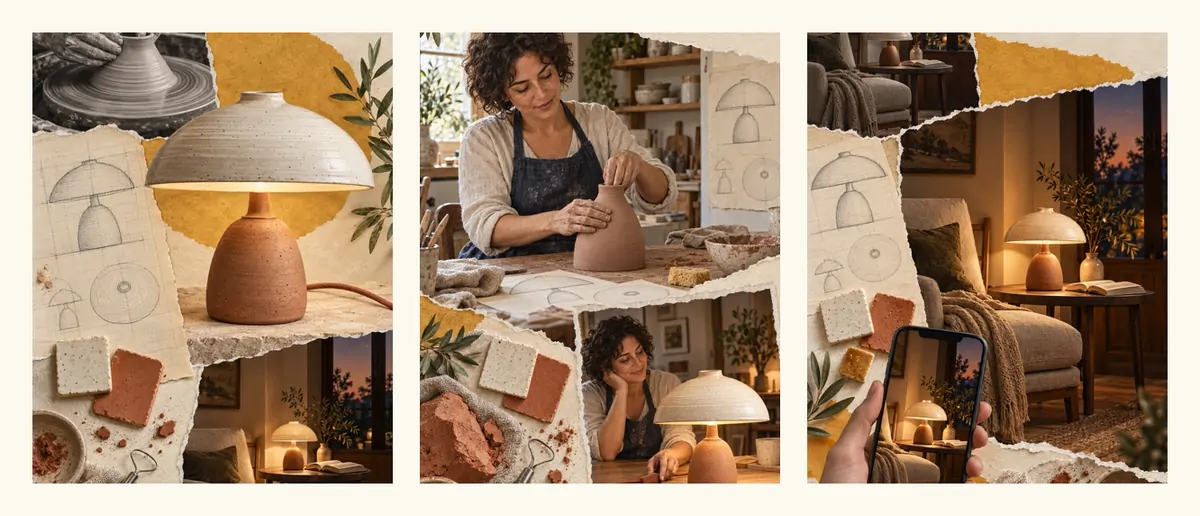
Before choosing an idea from the list, decide which angle you want.
- The product: what it is, what it's made of, why it looks the way it does.
- The person: who made it, who uses it, who it helps.
- The experience: the moment it changes something, however small.
Then write the idea as one sentence. If you can't, the scenes won't know what to show either.
One object, three jobs
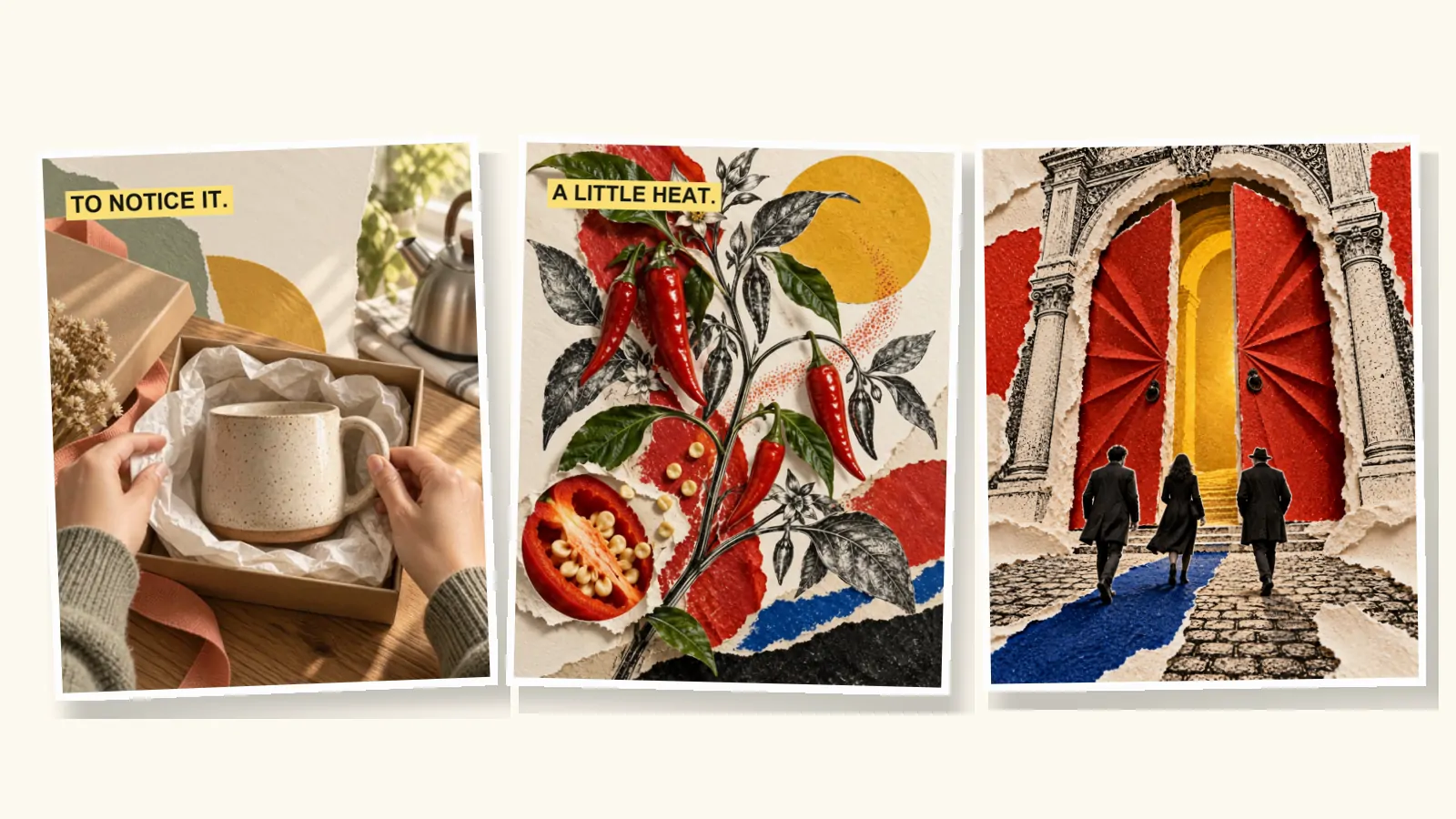
The mug ad is the clearest demonstration of the "angle" idea. One handmade mug gets three jobs in sixty seconds: stop someone scrolling, make someone curious, become a gift. Nothing about the mug changes. Only the reason to notice it does.
That structure, one subject and three angles, works for almost any product. It is the first idea on the list below.
Product ads
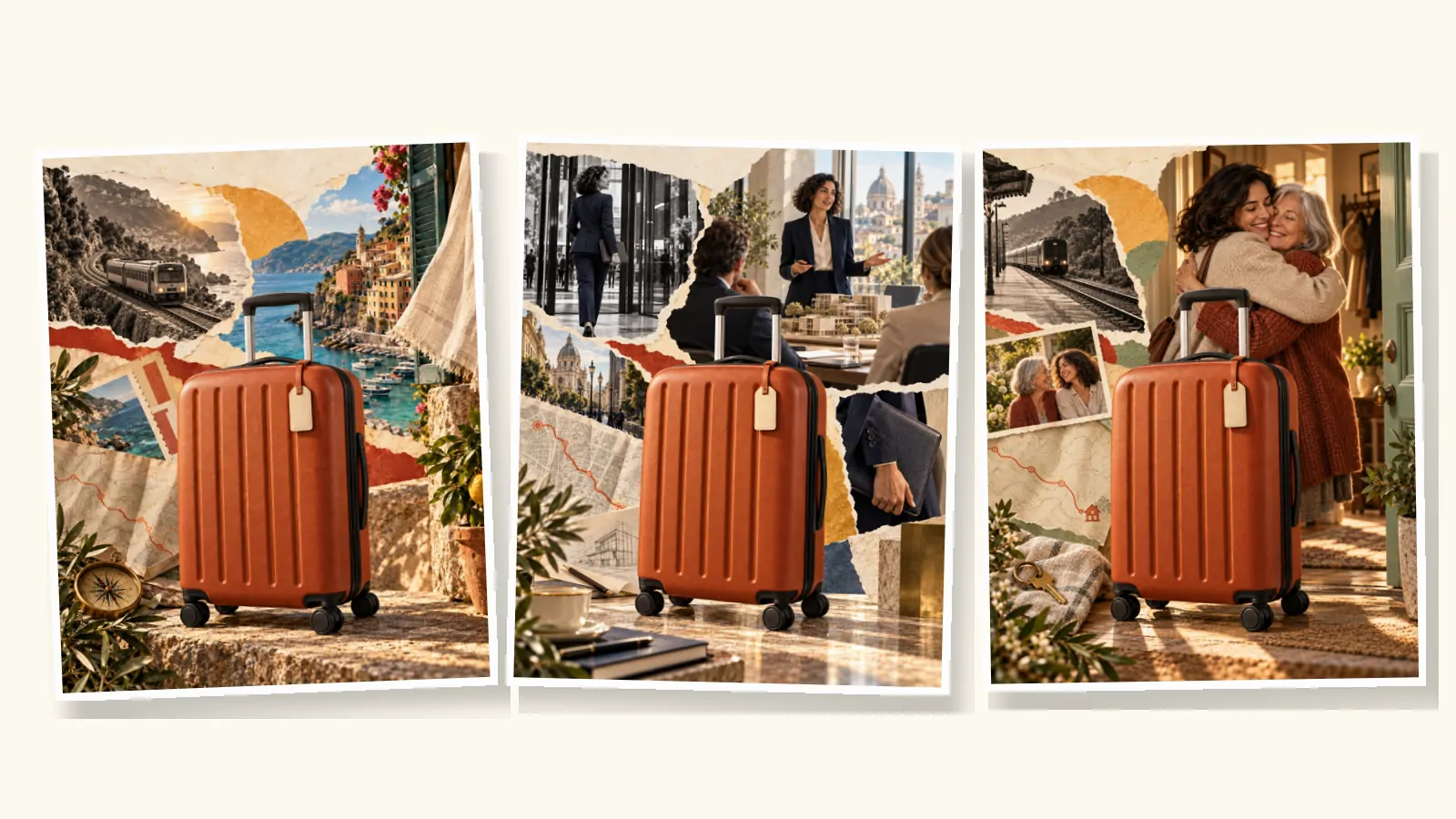
- One product, three stories. Hook: "Same suitcase. Which version felt like you?" Scenes: the product alone; story one; story two; story three; the question; the call to action. 60–75 s, 4:5 or 9:16. Our suitcase ad tells a first trip, a business pitch and a homecoming with one case.
- The origin story. Hook: "You could show what it looks like. Or show why it exists." Scenes: finished product; the first sketch; raw material; hands shaping it; the product in use. 45–60 s, 4:5.
- The detail nobody notices. Hook: "Look closer." Scenes: the whole product; a slow push-in to one detail; why that detail matters; the product again, seen differently. 15–30 s, 9:16.
- Exaggerate one sensation. Hook: a question about the feeling, then the exaggeration. Our hot sauce ad turns one drop into a small eruption. Scenes: the product; the moment of use; the exaggerated reaction in collage; the pitch. 30–60 s, 9:16.
- The ticket somewhere. Hook: name what the product lets someone escape. Our telescope ad makes a telescope "a ticket out of the city". Scenes: the ordinary place; the product; the journey; the return, changed. 45–60 s, 4:5.
Apps and digital products
Software is hard to film. Collage lets you show the problem, the screen and the person in one frame.
- The before and after of a working day. Hook: "Your inbox can wait." Scenes: the cluttered before; the moment the tool appears; the same day, calmer. 30–45 s, 9:16.
- One feature as a story. Hook: the question the feature answers. Scenes: someone stuck; the feature, shown simply; what they do with the time saved. 30–60 s, 1:1 or 4:5. The middle section of our coffee ad does this with a planning tool.
- Why we built it. Hook: "We kept running into the same problem." Scenes: the problem in the wild; the first rough version; what changed; what users do now. 60–90 s, 16:9 for your website.
Local businesses and events
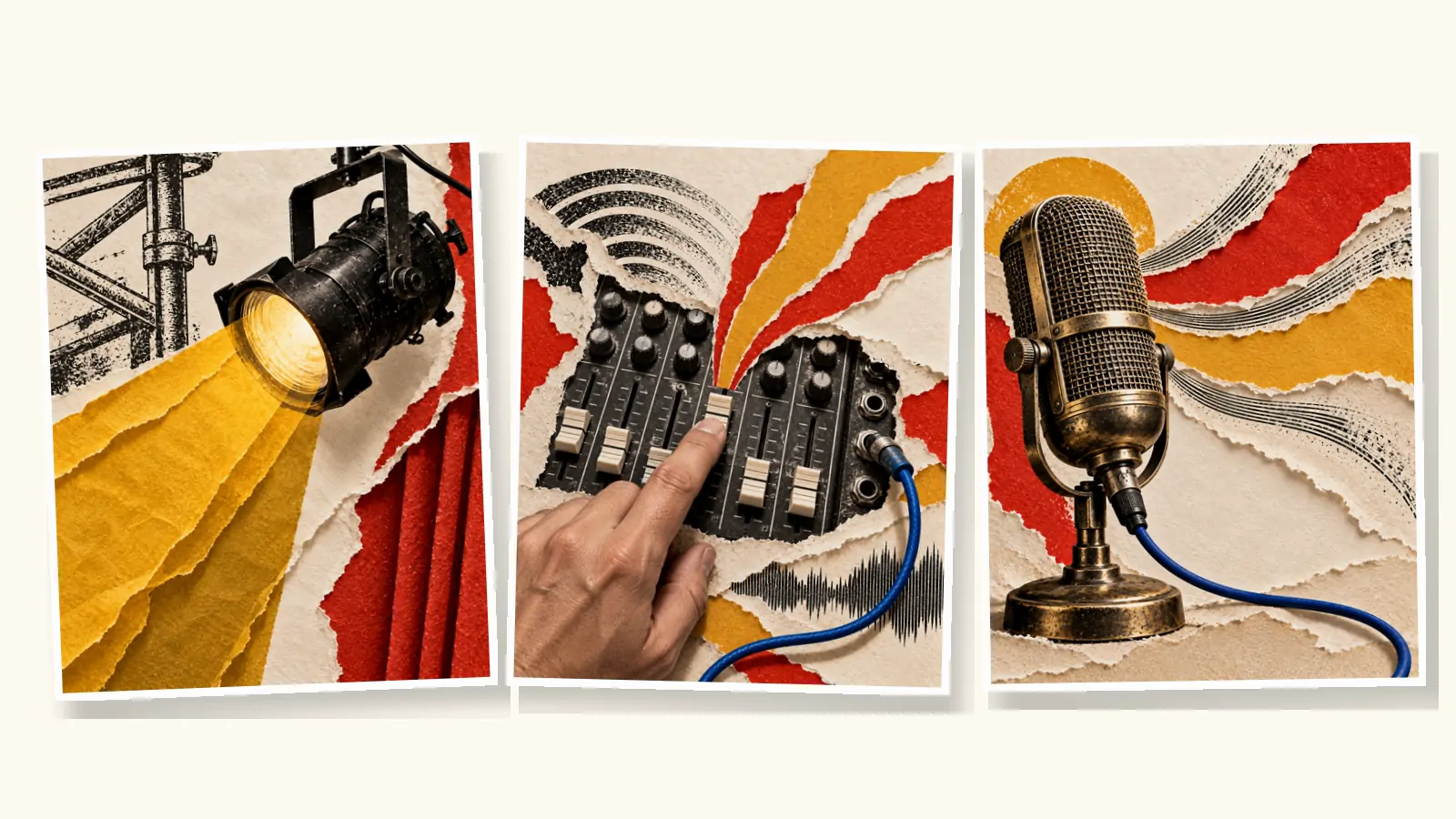
- The invitation. Hook: "Let's fill an empty room." Scenes: the empty space; a light comes on; someone checks the sound; the first person pauses at the door; the night begins. 30–50 s, 9:16. Our music venue ad is built exactly like this; add the date and the address in the final label.
- The dish with a history. Hook: "Why are you looking at a jar of sauce?" Scenes: the jar; a grandmother's recipe; Sunday lunches; the first market stall; the jar again, with its history around it. 45–60 s, 9:16 or 4:5. This is the outline of our tomato sauce ad.
- Behind the counter. Hook: "Before you arrive, this happens." Scenes: the early morning set-up; one careful task; the first customer; the result. 30–45 s, 9:16.
- The street's story. Hook: "This building used to be something else." Scenes: an old photograph or map; what changed; who is here now; an invitation to visit. 60–90 s, 4:5. Use archive images you have the rights to.
Explainers
- Myth or fact. Hook: "You've probably heard that…" Scenes: the claim; where it comes from; the evidence; the real answer. 60–120 s, 16:9 or 9:16.
- How it works. Hook: "Here's what happens inside." Scenes: the outside; the first step; the key mechanism, labelled; the result. 60–120 s, 16:9.
- One number, explained. Hook: the number, large, on a highlight. Scenes: the number; where it comes from; what it compares to; what it means for the viewer. 30–60 s, 1:1 or 9:16. Typeset every figure; never let an image model draw numbers.
- Why it looks like that. Hook: a question about an everyday design. Scenes: the object; its earlier versions; the constraint that shaped it; today's version. 60–120 s, 16:9. Check every historical claim against a source you can cite.
Personal stories and short documentaries
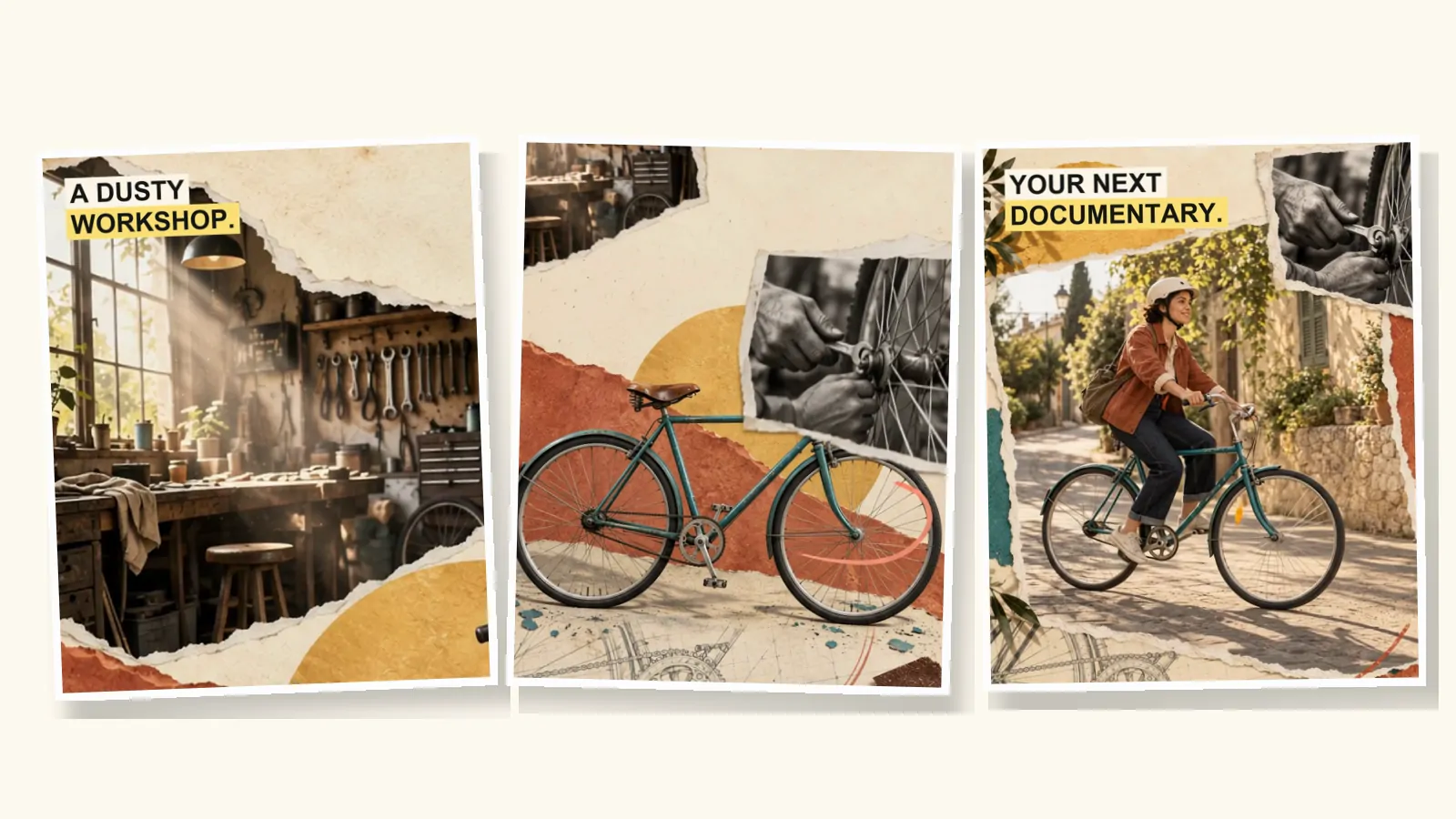
- The restoration. Hook: "Let's make you care about this old bike." Scenes: the object in its worn state; the workshop; the hands at work; the first use after. 45–60 s, 4:5. This is our bicycle ad.
- The first sale. Hook: "It started at a kitchen table." Scenes: the first version; the first customer; the hard part; where it is today. 60–90 s, 4:5 or 16:9.
- A customer's journey. Hook: the moment before they found you. Scenes: their problem; the turning point; what changed; their own words, if they agree to be featured. 60–90 s, 16:9. Get consent and keep claims to what they actually said.
- A place and its people. Hook: "Most people walk past this door." Scenes: the outside; the people inside; one small ritual; why it matters to them. 2–5 minutes, 16:9. This one is closer to a short documentary; our Vox-style documentary guide covers the longer form.
Which length and format for which idea
| Idea type | Typical length | Best format | Where it runs |
|---|---|---|---|
| Product ad | 15–60 s | 9:16 or 4:5 | Reels, TikTok, feeds |
| App feature | 30–60 s | 4:5 or 1:1 | Feeds, app store, email |
| Local event | 30–50 s | 9:16 | Stories, Reels, WhatsApp |
| Explainer | 1–2 min | 16:9 or 9:16 | YouTube, website, Shorts |
| Personal story | 1–5 min | 16:9 or 4:5 | YouTube, website, feeds |
A 60-second script holds about 150 spoken words at a natural pace; our narrations ran between 147 and 158 words a minute. The Vox-style script guide turns any of these outlines into a timed script.
From idea to video
- Write the one-sentence brief. For example: "Make a telescope feel like a ticket out of the city."
- Pick the angle: product, person or experience.
- Write the hook as a question or a doubt, not as your brand name.
- List the scenes, one idea each, and note what the narrator names in each one.
- Choose the format for where the video will run, and keep labels inside its safe area.
- Make it, by hand, with an AI tool chain or with vox.style. Our AI workflow guide shows the prompts we use at each step.
Mistakes that sink a good idea
- Three ideas in one video. Pick one angle per video, or announce the three angles up front as the mug and suitcase ads do.
- Opening with the logo. The first seconds belong to the viewer's question.
- An explainer without sources. If you state a fact, be able to show where it came from.
- Real people without permission. Customer stories need consent, and AI-generated people need disclosure on most ad platforms.
- A pretty video with no point. Collage holds attention for a few seconds; the story has to do the rest.
FAQ
What makes a good Vox-style video idea?
A clear question, one angle and something visual to show for every line. If the idea can be explained in a sentence and each scene has one job, the collage style will carry it.
Can I use these Vox-style video ideas for YouTube?
Yes. Explainers, "why we built it" stories and short documentaries work well on YouTube at 16:9 and one to five minutes. Product ads suit Reels, TikTok and Shorts at 9:16.
How many scenes does a 60-second video need?
Ten to fourteen scenes of three to six seconds each is typical. You can cut several shots from one detailed collage: our bicycle ad has 22 shots from five scene images.
Do I need my own photos?
No, but they help. Product photos and brand assets keep the product accurate from scene to scene. vox.style lets you bring your own reference images and start from a product URL.
How do I make the motion feel right?
Keep it slow and restrained, with a few moving elements per shot. The motion graphics guide covers labels, transitions and timing.
The ads mentioned in this article are illustrative work we produced by hand while building vox.style; the products, people and brands are fictional, and every ad promotes vox.style. vox.style is an independent product, not affiliated with Vox or its owners.