Vox-style videos
Vox-style documentary: how to make a documentary explainer, from question to final cut
How to make a Vox-style documentary: the structure, research and sourcing, archive rights, where AI belongs and where it doesn't, for 60 seconds to 20 minutes.
A Vox-style documentary is a short, reported film that answers one question. A narrator guides the viewer through the evidence, and the screen shows that evidence as collage, archival photographs, maps, documents and short highlighted words. It sits between an essay and a news report: argued like an essay, sourced like reporting, and built to keep a general audience watching.
This guide covers where the form comes from, how to structure one at three lengths, how to research and source it, which archive material you can use, and where AI helps and where it would mislead. It draws on Vox's published series and on our own short story films. For the visual side, see the Vox-style videos guide.
What makes a documentary "Vox-style"
Five things set it apart from a talking-head documentary.
- One question. The film exists to answer it. Why did this border end up here? What happened to this bike?
- A narrator who explains. The voice is conversational and direct. It admits what it doesn't know and tells you what to look at.
- Evidence on screen. Documents, maps, archival photos and charts appear when the narration relies on them, often with the key line highlighted.
- Collage instead of B-roll. Photographs, engravings and paper are layered to build scenes that couldn't be filmed.
- Chapters. The answer arrives in steps, each one a smaller question.
Where the form comes from
Vox launched in 2014 as an explanatory news site and built its video team around explainers. Several of its series pushed the explainer toward documentary.
| Series | Who | When | What it added |
|---|---|---|---|
| Borders | Johnny Harris | 2017–2019 | A reporter travelling to border regions, combining interviews, maps and narration. Nominated for a News and Documentary Emmy in 2018. |
| Earworm | Estelle Caswell | Late 2010s | Music history explained with annotation and archival clips. Two Emmy nominations in 2018. |
| Explained (Netflix) | Vox Media | 2018–2021 | One topic per episode, about 16 to 24 minutes, across three seasons. |
| Glad You Asked | Cleo Abram, Joss Fong, Christophe Haubursin, Alex Clark | From 2019 | Hosts investigating a single question on camera. |
| Missing Chapter | Ranjani Chakraborty | Around 2020 | Overlooked history, with archival material at its core. Online Journalism Award, 2020. |
Sources: Johnny Harris) and Vox) on Wikipedia, Digiday on Earworm, Explained) on Wikipedia, Tubefilter on Glad You Asked, and the Online Journalism Awards.
Borders season 2 shows how lean the method can be: five Hong Kong films shot in twelve days, with story ideas and interviewees crowdsourced from local people (journalism.co.uk). Harris later left Vox and built his own channel on a similar approach.
Vox style or Johnny Harris style?
People often search for both. The difference is one of emphasis. In Harris's work, the reporter's own journey through real places is the thread the viewer follows. Vox's wider output more often builds the explanation from planned research, interviews, narration and visual evidence, with the narrator off screen (DocumentaryTube). Both use maps, collage and on-screen sources. If you can't travel, or the story is about something that can't be filmed, the Vox approach is the practical one.
Three lengths, one structure
| Length | Where it runs | Spoken words | Chapters |
|---|---|---|---|
| 60–90 seconds | Reels, TikTok, feeds | 150–220 | None; one turn |
| 8–15 minutes | YouTube, your website | 1,200–2,200 | 3–5 |
| About 20 minutes | Streaming, series, courses | About 3,000 | 4–6 |
The word counts assume about 150 spoken words a minute, which is where our own narrations landed (147 to 158). Documentary narration leaves more room for pauses, archival sound and interviews, so plan a little below that.
A 10-minute outline
| Time | Section | Job |
|---|---|---|
| 0:00 | Cold open | A concrete scene or object that makes the question unavoidable |
| 0:45 | The question | Say it plainly, and say why it matters now |
| 1:30 | Chapter 1: context | What the viewer needs to know before the answer makes sense |
| 3:30 | Chapter 2: evidence | Documents, data, maps, interviews; the core of the film |
| 6:00 | Chapter 3: the turn | The complication, the surprise or the counter-argument |
| 8:00 | The answer | What the evidence adds up to, and how sure you are |
| 9:15 | The ending | Return to the opening scene, now seen differently |
On YouTube, add chapters in the description. The first timestamp must be 00:00, there must be at least three, and each chapter must last at least ten seconds (YouTube Help).
The 60-second documentary
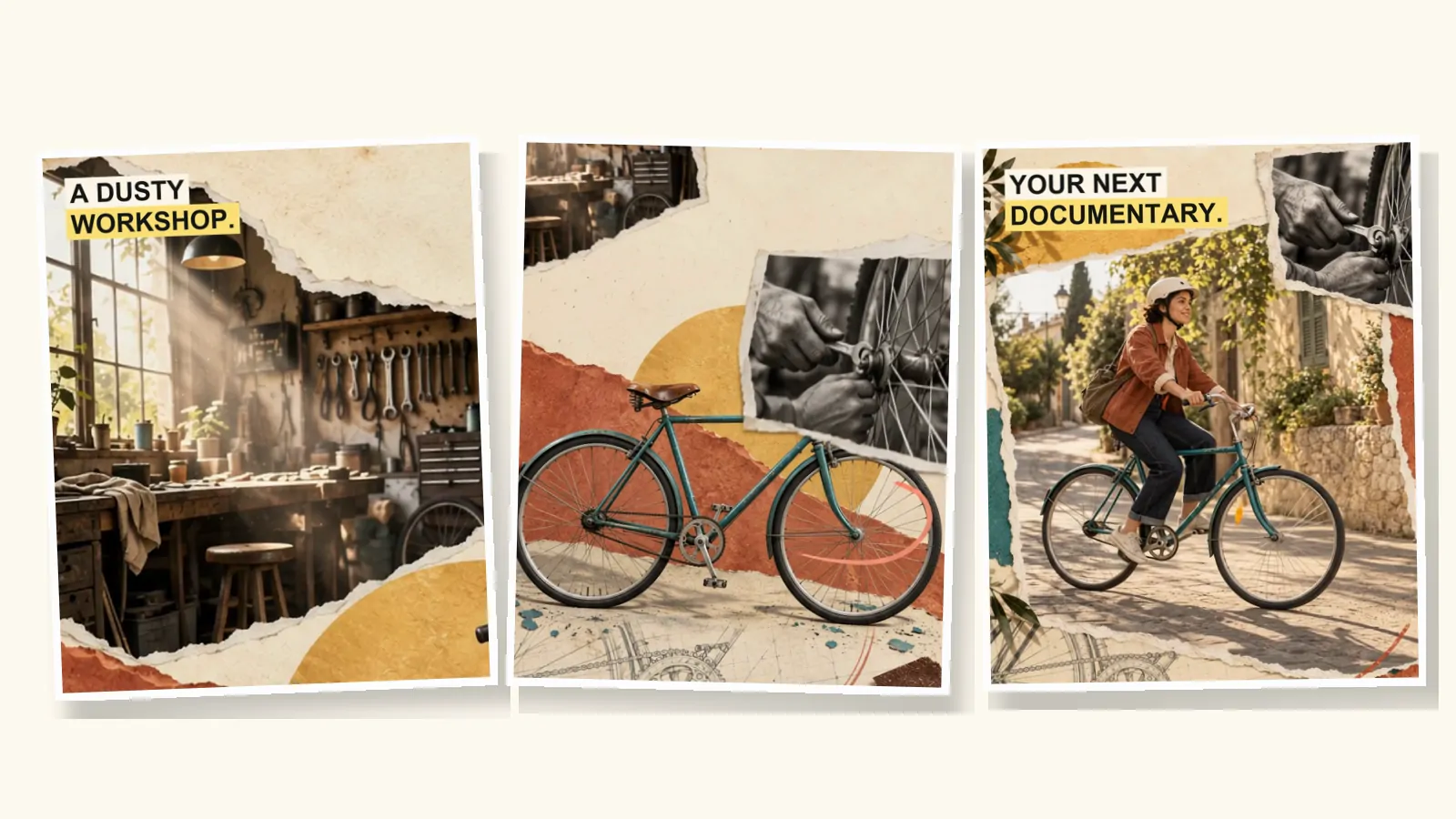
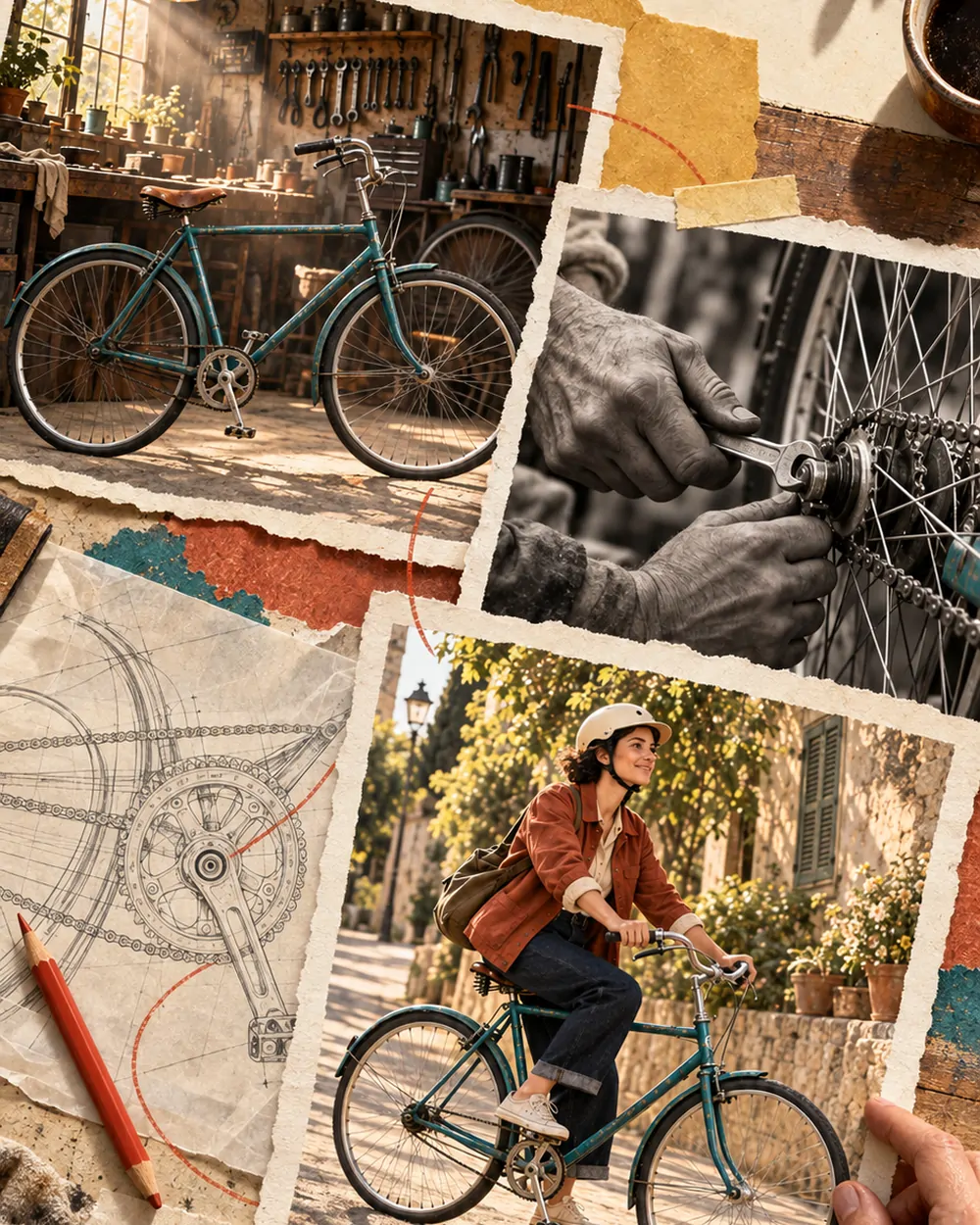
The short version has the same spine with no room for chapters: a subject, the people around it, a change, and what it means. Our bicycle ad is built that way. It shows a scratched frame, a dusty workshop, hands at work, and then the first ride. For a moment, "we're not looking at a bicycle. We're watching someone get moving again."
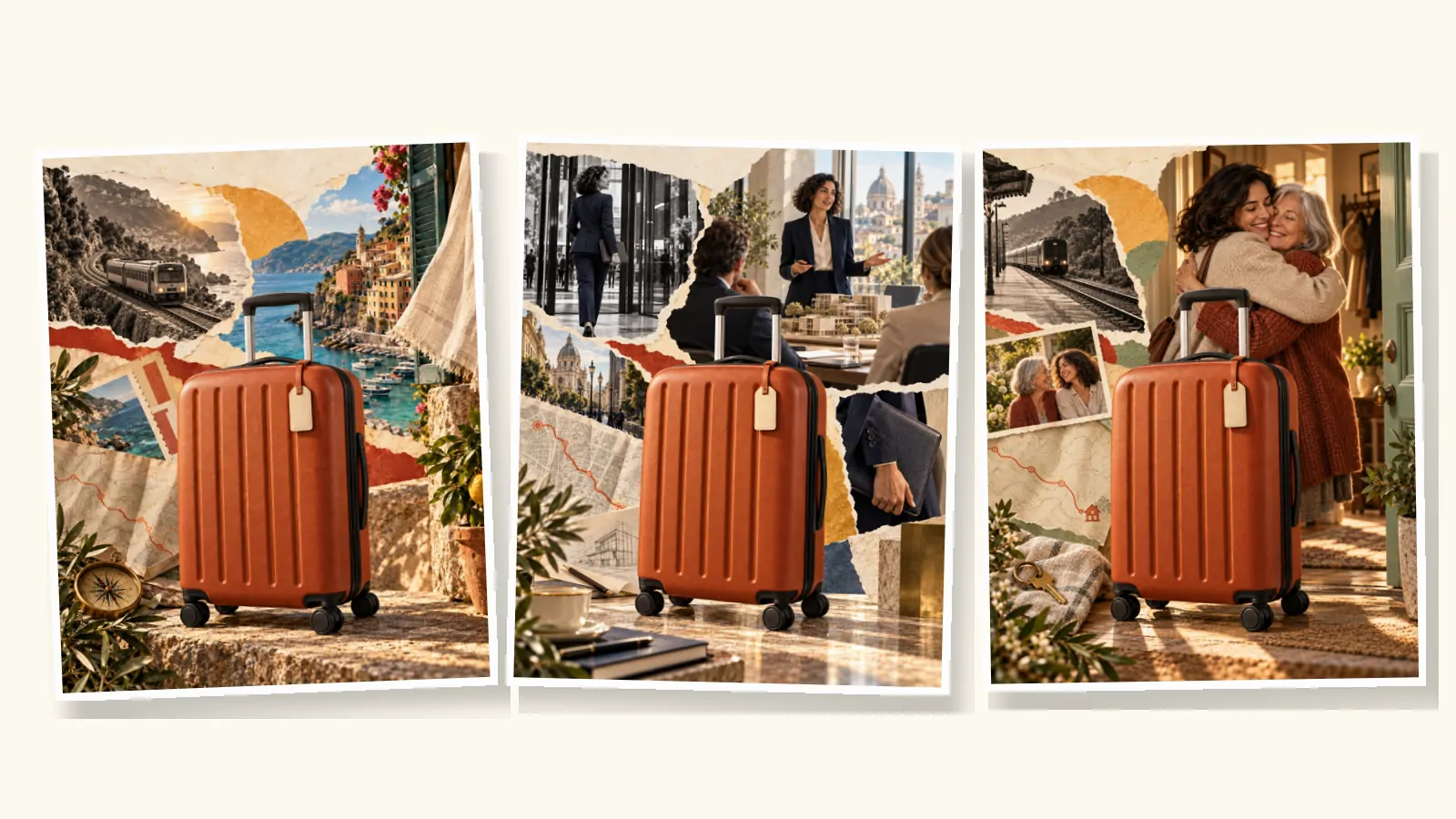
It is an ad, and its people are fictional, but the shape is a mini documentary: start with an object, find the person, show the change. Our suitcase ad says it in one line: "A documentary around the person."
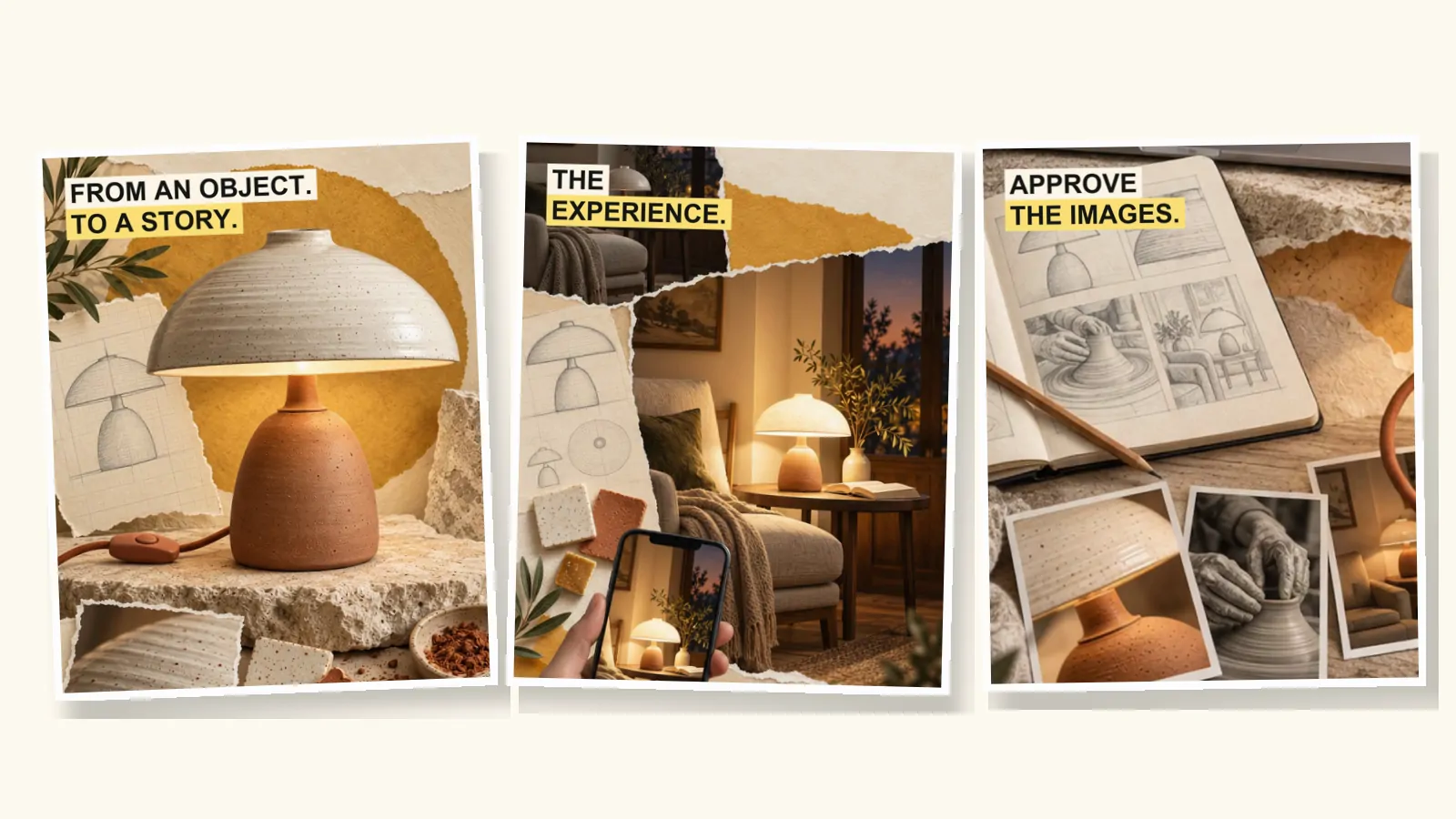
When we plan a story like this, we lay it out as a row of prints before writing the final script. If the three or four images don't tell the story on their own, the narration won't rescue it.
Research and sourcing
A documentary explainer is only as good as its sources. Keep a source log from the first day, one row per claim.
| Claim | Source | Link | Checked on | Shown on screen? |
|---|---|---|---|---|
| The claim, in your own words | Who published it | URL or archive reference | Date | Yes / no, and how |
Four habits make the difference.
- Two sources for anything central. If the film depends on a fact, find a second independent source.
- Prefer primary material. The original report, law, dataset or interview beats a summary of it.
- Show your evidence. When the narration relies on a document, put the document on screen and highlight the line.
- Separate facts from your interpretation. Say "the data suggests" when it only suggests.
Vox's teams work fast: its art director told Storybench that a video takes "two to three weeks max" (Storybench). That pace is possible because research, script and visuals overlap, not because any of them is skipped.
Archive material you can use
Archival photographs, film and maps give a documentary its texture. Check the rights of every item, not just the collection.
- Library of Congress, Free to Use and Reuse: themed sets of items with no known copyright restrictions. Privacy and publicity rights are a separate question.
- NASA: most images are not copyrighted in the US, but logos are protected, use must not imply endorsement, and third-party images are marked as such.
- Smithsonian Open Access: millions of images released under CC0, with no restrictions.
- Prelinger Archives: many films are free to reuse, but not all, and a public domain film can contain copyrighted music. Check each item.
- Wikimedia Commons: every file has its own licence and attribution terms on its page.
- US National Archives: federal government works are generally public domain, but not everything the archive holds is.
- Europeana: each item's rights statement tells you what you may do with it.
In the United States, documentary makers also rely on fair use. The Documentary Filmmakers' Statement of Best Practices in Fair Use (2005) describes four common situations: critiquing copyrighted material, quoting it to illustrate an argument, capturing it incidentally while filming, and using it in a historical sequence. Fair use depends on the facts of each use and doesn't exist in the same form everywhere. This is not legal advice; for a commercial release, ask a lawyer.
Where AI belongs in a documentary
AI is useful for the parts of a documentary that are openly illustrative, and harmful anywhere the viewer could mistake it for evidence.
Good uses:
- Collage scenes that are obviously illustrations, for ideas, feelings and processes that can't be filmed.
- Transitions and gentle motion on approved images.
- A first draft of the script outline, which you then rewrite and source.
- Narration, if you have the rights to the voice and disclose it where required.
Don't:
- Generate "archival" photographs or footage of real events, places or people. A realistic fake in a documentary is a fabrication, however it is labelled later.
- Let an image model draw maps, charts, documents or numbers. Build them from real data and real documents.
- Clone a real person's voice without their permission.
Our own production notes mark every scene image as an illustration, not as evidence of anything real. Platforms and regulators are moving the same way. The EU AI Act requires disclosure of deep fakes from August 2026, and ad platforms ask for AI labels; our Vox-style ads guide summarises the current rules.
Narration and interviews
- Write for the ear. Short sentences, one idea each, about 150 words a minute. Our Vox-style script guide shows how to time a script to scenes.
- Let the narrator guide. Tell the viewer what to look at: "Look at the date on this letter."
- Use interviews for what only that person can say: an experience, a decision, a memory. Get written consent, and keep their words in context when you cut them.
- Leave space. Pauses before a reveal or after a hard fact give the viewer time to take it in.
The visual toolkit
Documentaries lean on the evidence moves of the style more than ads do: the document zoom with a highlighted line, the map that traces a route, the chart that builds from a real dataset, annotation drawn over an archival photograph. Our Vox-style motion graphics guide covers each of them with timings, and the animation tutorial shows how to build them.
Checklist before you publish
- The question is stated in the first minute.
- Every factual claim is in the source log, and central claims have two sources.
- Every archival item has a recorded licence and credit line.
- No AI-generated image could be mistaken for a real photograph of a real event.
- Maps, charts and numbers are built from data and typeset.
- Interviewees have given consent.
- The film has a caption file and, on YouTube, chapters.
- Sources are listed in the description.
FAQ
What is a Vox-style documentary?
A short documentary explainer that answers one question with narration and visible evidence: collage, archival photographs, maps, documents and highlighted labels. It is argued like an essay and sourced like reporting.
How long should a Vox-style documentary be?
For social media, 60 to 90 seconds. For YouTube, 8 to 15 minutes with chapters. Vox's Netflix series Explained ran about 16 to 24 minutes an episode.
Do I need to travel or film to make one?
No. That is one of the strengths of the Vox approach. Archival material, documents, maps and collage can carry a whole film, with narration holding it together.
Can I use AI for a documentary?
For openly illustrative collage, motion, script drafts and narration with proper rights, yes. Never use it to create realistic images of real events or people, or to draw maps, charts or documents.
Can vox.style make a documentary?
vox.style makes short documentary-style films, personal journeys and explainers from an idea, your own script or a product URL. You review the script, the voice and the scene images before the full video is made. For a longer documentary, you can use it for illustrated sequences inside a larger edit.
The films in this article are illustrative work we produced by hand while building vox.style; the products, people and brands are fictional, and every ad promotes vox.style. vox.style is an independent product, not affiliated with Vox or its owners.