Vox-style videos
Vox-style ads: how we make an editorial video ad, from one sentence to final cut
How to make Vox-style ads: the six-beat structure, the full build log of our telescope ad including rejected scenes, the right formats and AI disclosure rules.
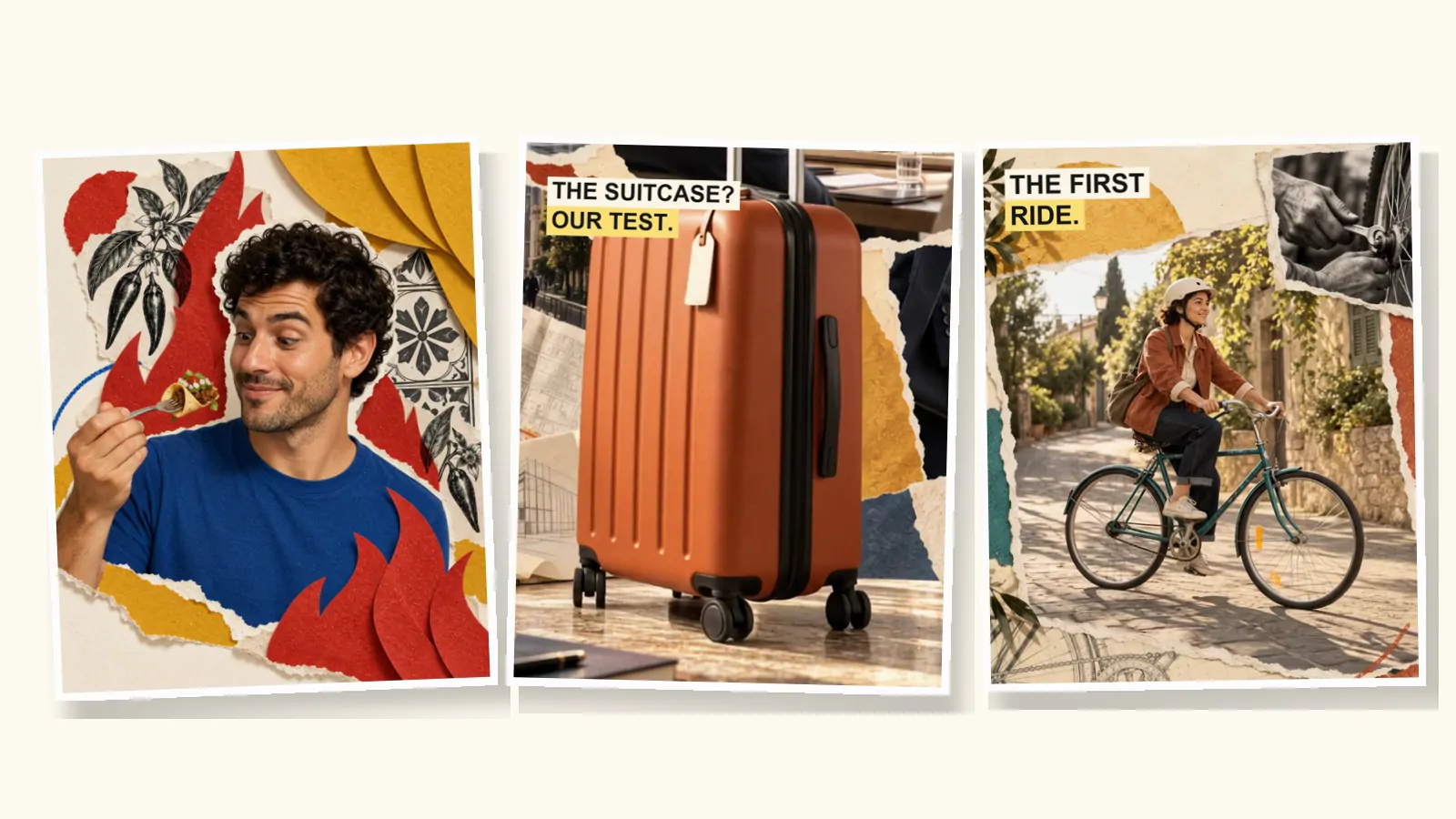
Vox-style ads are short video ads built like an editorial explainer: paper-collage scenes, a narrator who talks to the viewer, and short highlighted words on screen. Instead of opening with the brand, they open with a question, show the product inside a small story, and make the pitch only after the viewer has a reason to stay.
We produced nine of these ads while building vox.style, for products from a telescope to a jar of tomato sauce. This guide walks through one of them from a single sentence to the final cut, including the scenes we rejected. It then covers formats, and what Meta, TikTok, Google and the EU currently say about labelling AI-generated ads.
Why the editorial look works in a feed
A Vox-style ad borrows the visual language of explainer journalism, which people associate with learning something, not with being sold to. We haven't run a controlled test of performance, so we won't quote numbers. The format does have three practical strengths that matter in paid social.
- It reads with the sound off. Two to six highlighted words per scene carry the story in a muted feed.
- It doesn't need a presenter. No shoot, no avatar, no stock actor delivering a script.
- It explains as well as it sells. The collage can show where a product comes from, how it works and who it is for, all in one frame.
The risk is the opposite of most ads: an editorial look that never gets to the point. The structure below fixes that.
Nine ads, one structure
| Ad | Opening line | Length | Formats |
|---|---|---|---|
| Telescope | "Another ad for a video tool? Fair." | 56 s | 4:5 |
| Mug | "I could tell you Vox Style makes videos." | 60 s | 4:5 |
| Hot sauce | "This is an ad for a video maker. The hot sauce is here to explain." | 60 s | 4:5 |
| Suitcase | "This is an ad for Vox Style. The suitcase? Our test." | 74 s | 4:5 |
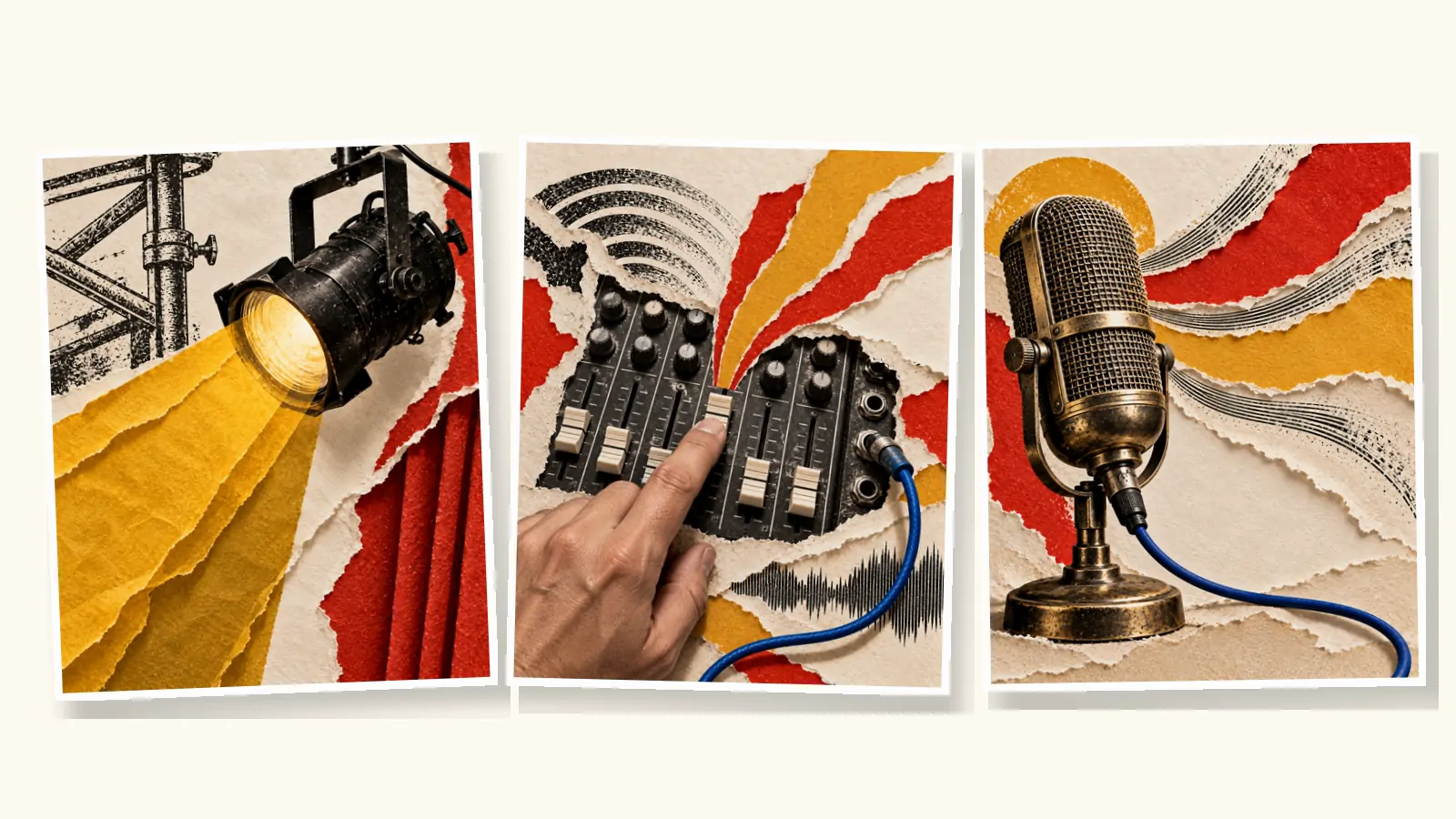
| Music venue | "This is an ad for Vox Style. But first, let's fill an empty room." | 50 s | 4:5 |
| Tomato sauce | "This is an ad for a video tool. So why are you looking at a jar of sauce?" | 60 s | 9:16 and 4:5 |
| Lamp | "This is an ad for a video tool. So let's make it earn your attention." | 60 s | 9:16 and 4:5 |
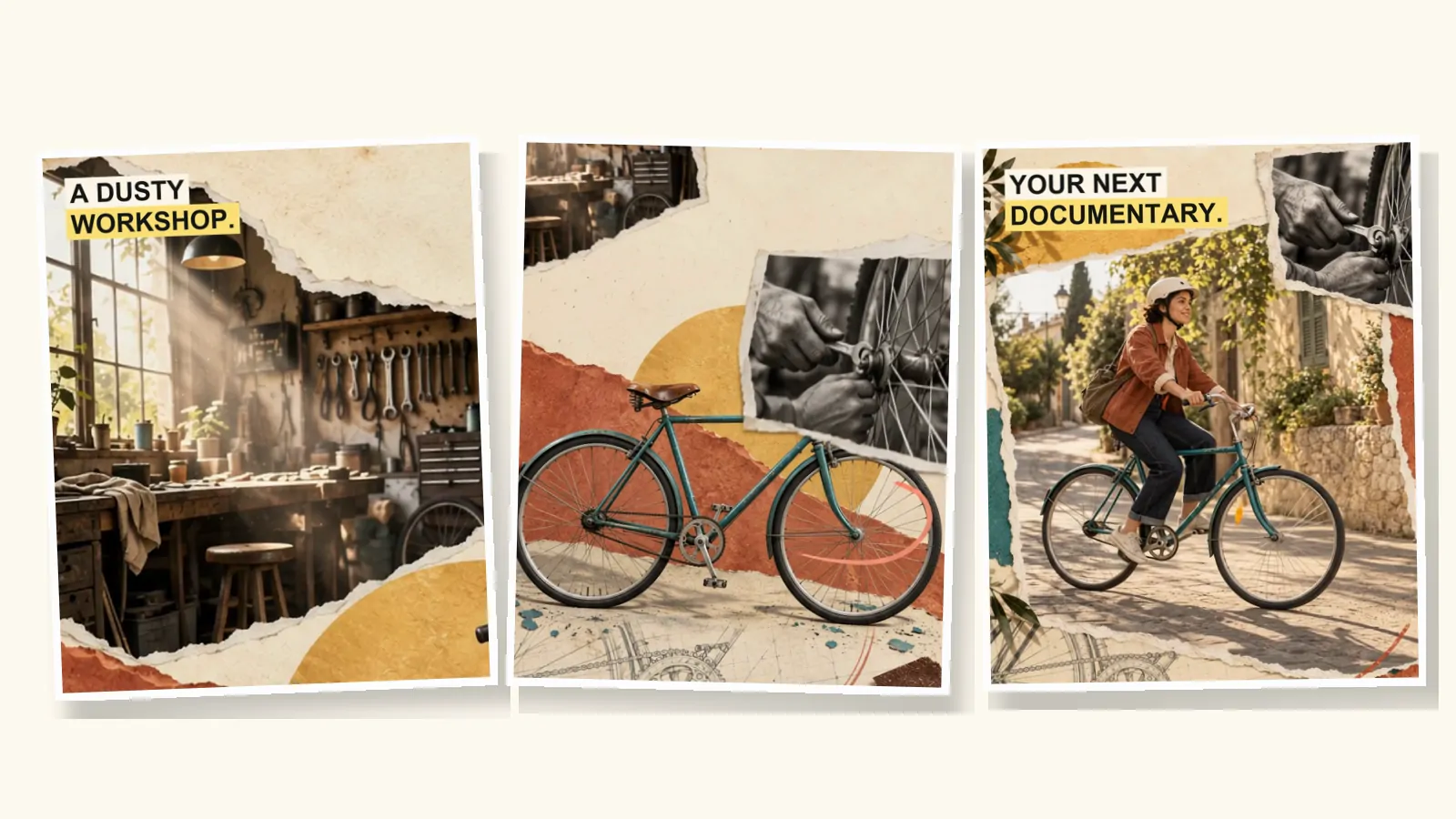
| Bicycle | "Another ad for an AI video tool? Skip the pitch." | 60 s | 9:16 and 4:5 |
| Coffee | "Another ad for a video tool? Skip the pitch. Watch this." | 60 s | 9:16 and 4:5 |
All nine are illustrative: the products, makers and brands are fictional, and each advertises vox.style itself. They share six beats: an anti-pitch hook, a quick proof, a change of angle with a "Still watching?" check-in, the core pitch, three short benefits and one call to action. The Vox-style script guide breaks that structure down line by line with timings, and our Vox-style video ideas turn the same structure into twenty other stories.
Build log: the telescope ad
Here is the finished ad. Below it is everything that happened between the brief and this cut.
1. One sentence
The whole brief was: "Make a telescope feel like a ticket out of the city." The ad says that line out loud, so the method is part of the story.
2. Script and scene plan first
Before any image existed, we approved the script and a 12-scene plan: an apartment at night, the brief in a notebook, a paper ticket bending into a passage through the skyline, a rooftop, the last lit window, the skyline, an observatory, the moon, the return home, the art direction, the voice, and a finale. Each scene had one job tied to one line of narration.
3. Still images, reviewed before anything moves
We generated one finished collage image per scene and reviewed all twelve before spending anything on animation. The art direction was specific: realistic photographic cutouts, cream paper edges, midnight-blue engraving fragments, warm amber against deep blue, and no text inside the images. Every word on screen is typeset separately later, so it is always sharp and spelled correctly.
4. Voice, then music
A short voice audition came first, then the full narration: 126 words, 50.3 seconds, recorded once and kept at its original speed. An instrumental bed followed, mixed under the voice and dipped briefly under "You just left the room."
5. One motion test before the rest
We animated a single six-second rooftop scene first and checked it for movement and artefacts. Only after that test passed did we animate the remaining eleven scenes, with no automatic retries. If the test fails, you have paid for one short clip, not twelve.
6. Two scenes rejected
Two animated scenes didn't make it through review.
- Scene 10, the reveal: a paper sheet was meant to peel away and reveal a photograph of the moon, but it uncovered the same image that was already showing. We made a new opening frame where a rough pencil sketch covers the photograph, so the peel reveals something new.
- Scene 11, the voice: dark fabric in the background floated like a flag once animated. We replaced it with a bright ivory wall and oak acoustic slats, then animated the scene again.
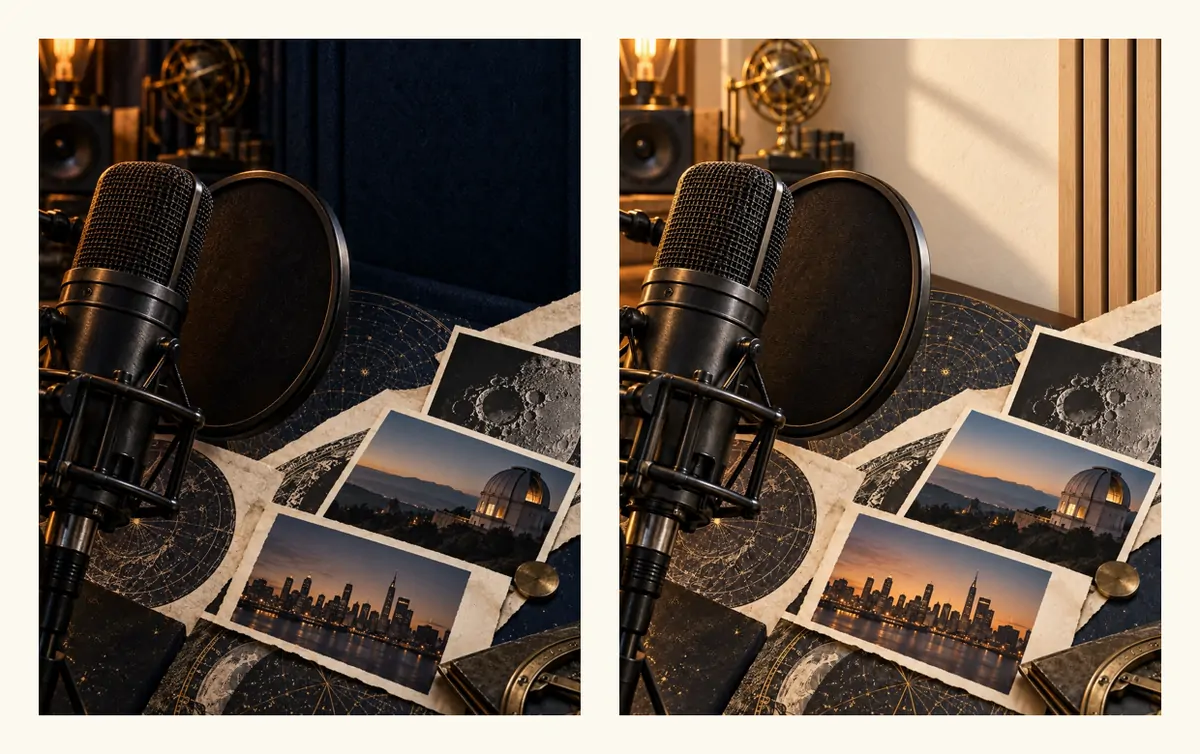
This is normal. Across our nine ads we also rejected first music tracks that contained vocals, and repaired a bicycle image that had an extra set of rear gears. Budget for one or two corrections per ad.
7. Final edit
The final cut runs 56 seconds at 1080 × 1350 and 24 frames per second. It uses all twelve scenes across 19 shots, the approved narration and music, and the exact typography composited on top. Audio generated by the animation model was removed, so only the approved voice and music remain.
What carried over to the product: in vox.style, the same order applies. You approve the script and voice, review the scene images before the full video, and confirm an exact credit quote before generation. The cost guide shows what that means in practice.
Formats and placements
Make one master and adapt it, rather than designing three different ads.
| Format | Where it fits |
|---|---|
| 9:16 | Reels, Stories, TikTok, YouTube Shorts |
| 4:5 | Facebook and Instagram feeds |
| 1:1 | Feeds and marketplaces where square is the default |
| 16:9 | YouTube, websites, presentations |
Keep headlines and important details inside the central safe area. Platform buttons, captions and profile names cover the bottom and right edges of vertical placements. Our 9:16 ads were reframed to 4:5 for feeds by re-rendering the typography for the new frame, not by cropping the finished video. vox.style supports 9:16, 4:5, 1:1 and 16:9.
Do you need to label AI-generated ads?
Rules changed several times in 2025 and 2026. This is what the official pages said when we checked in November 2026. It is not legal advice; check the current policy before you launch.
- TikTok: advertisers must turn on "This ad contains AI-generated content" when an ad includes image, video or audio that is "completely AI-generated or significantly modified by AI". The rule covers AI narration too, and undisclosed AI content can be rejected or restricted (TikTok ads policy, disclaimers).
- Meta: Meta labels ads made with its own generative AI tools, and says it is detecting ads created with third-party AI tools using industry-standard signals (Meta newsroom, updated June 2026). Social issue, election and political ads must disclose photorealistic or realistic-sounding synthetic content.
- Google Ads: advertisers can label AI-made ads themselves, and Google adds visible labels for campaigns in some regions, including the EU and California (Google Ads Help).
- EU AI Act, Article 50: from 2 August 2026, anyone using AI to create a "deep fake", content that falsely appears authentic, must disclose it (European Commission FAQ). An obviously illustrated collage is unlikely to qualify; a realistic person or a realistic voice might.
Our rule of thumb: if an ad shows a realistic person who doesn't exist, or a voice that sounds like a real person, disclose it on every platform that offers the option. Three of our nine ads include AI-generated people, so they would carry the label.
Mistakes we see in Vox-style ads
- All style, no point. Beautiful collage, but the product never gets a clear line.
- Text baked into generated images. It comes out misspelled or blurry. Typeset it separately.
- Animating everything at once. Test one scene first.
- Feature lists. Three benefits, said quickly, beat seven.
- Cropping a 9:16 master to 4:5. Labels end up off-centre or cut. Re-render the text for each format.
FAQ
Do Vox-style ads work better than regular video ads?
We haven't published a controlled test, and we'd be wary of anyone quoting a universal number. Treat a Vox-style ad as a new creative angle: run it against your current best ad with the same audience and budget, and judge it on hold rate and cost per result.
How long should a Vox-style ad be?
Our nine ads run 50 to 74 seconds, built for viewers who choose to keep watching. For colder audiences or Stories placements, cut a 15-second version that keeps the hook, one proof scene and the call to action.
Can I make a Vox-style ad from a product URL?
Yes. In vox.style you can start from an idea, your own script or a product URL. The app reads the page, drafts a script, and lets you review the direction before the full video is made.
Do I need to disclose that the ad uses AI?
On TikTok, yes, if it is fully or significantly AI-generated. On Meta and Google it depends on the content and region, and realistic people or voices raise the bar. See the section above for sources.
Is "Vox style" a brand?
No. "Vox style" describes the editorial look made familiar by Vox's explainer videos; vox.style is our product's name. Read what Vox-style animation is called, or the Vox-style videos guide for the full picture.
The ads in this article are illustrative work we produced by hand while building vox.style; the products and brands are fictional and every ad promotes vox.style. vox.style is an independent product, not affiliated with Vox or its owners.